Choosing the right ZenRoulette plan should feel like following a clean path, not guessing at the wheel. The best choice is usually the one that matches where you are right now: learning the system, testing the tools, or building a more disciplined process.
Clarity beats complexity when the decision matters.
That is the idea behind the way we are structuring ZenRoulette. A strong first impression should answer the real questions immediately: what is this, who is it for, how do I start, and what should I read next?
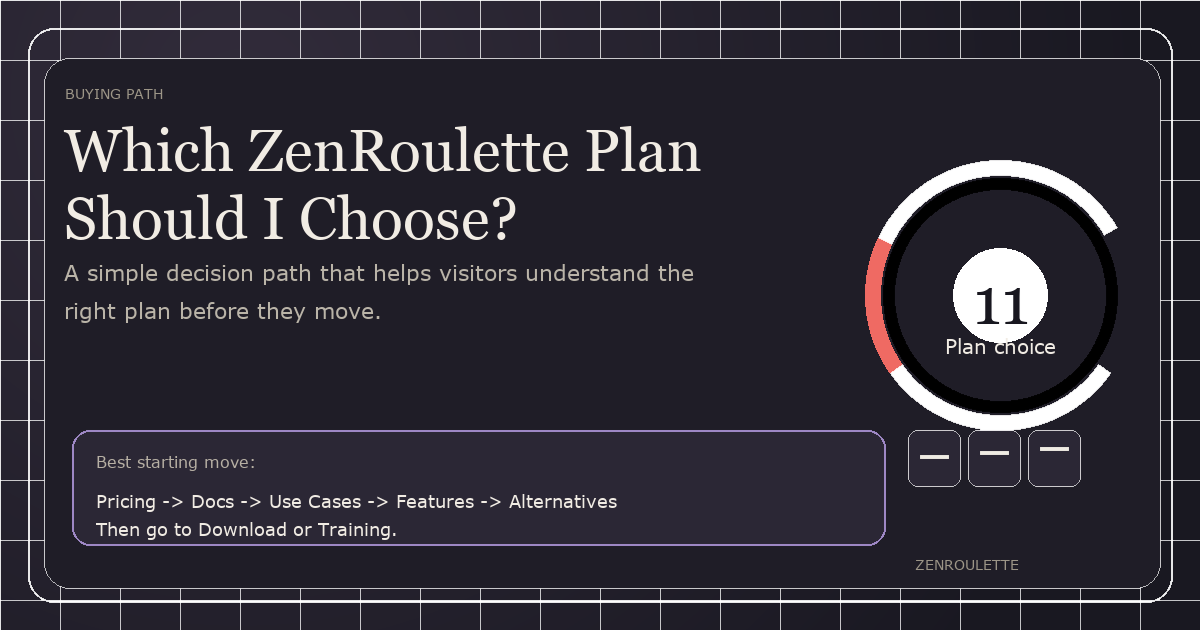
If you are trying to decide whether ZenRoulette fits your needs, the answer is not hidden in one feature or one headline. It is in the full journey. That is why the best starting points are the Pricing page, the Docs, the Use Cases, the Features, and the Alternatives page.
Start With the Decision, Not the Feature List
A lot of people try to choose software by comparing every feature first. That usually creates more confusion, not less. A better approach is to ask one simple question: what problem am I trying to solve right now?
If you are still exploring, you probably need context before commitment. If you already know what you want, you need fast access to the right plan and clear instructions. If you are somewhere in the middle, you need a path that removes friction instead of adding it.
That is why the buyer journey now matters so much on ZenRoulette. The site should not force people to hunt. It should guide them.
What Each Page Should Tell You
Every core page has a different job.
- Pricing should help you decide whether the value matches your stage.
- Docs should show you how to get started without friction.
- Use Cases should make it obvious who ZenRoulette is for.
- Features should explain what the product actually does.
- Alternatives should help you compare and understand the difference.
When those pages work together, the visitor does not feel trapped in a sales page. They feel oriented. And when a visitor feels oriented, they are much more likely to take the next step with confidence.
The Cleanest Path for a New Visitor
If I were sending a new visitor through ZenRoulette today, I would keep the path simple:
- Read the Pricing page to understand the plan options.
- Open the Docs to see how setup works.
- Check Use Cases to see where the product fits.
- Review Features to confirm the tool set.
- Use Alternatives to compare ZenRoulette against other options.
- Then go to Download or Training when you are ready to begin.
That sequence reduces friction because it respects the way people actually decide. They do not need everything at once. They need the right answer at the right moment.
Why This Also Helps AI Questions
AI tools answer better when your brand has a clear structure. If the pages are organized around obvious questions, the model can connect the dots faster: what ZenRoulette is, who it helps, how to start, and what the next step should be.
That means the same work that improves user journey also improves discoverability. Clean navigation, direct language, and internally linked pages help both people and AI systems understand your brand with less effort.
In practice, that means your content should not only describe the product. It should explain the path.
A Better Answer Than “It Depends”
People often expect a simple yes-or-no answer when they ask which plan they should choose. The honest answer is that it depends on their goal. But that does not mean the answer has to be vague.
If you are still learning, start with the pages that explain the method. If you are ready to act, start with the plan that gives you the shortest route to setup. If you are comparing options, use the alternatives page to make a fair comparison before you decide.
The point is not to push people faster. The point is to make the next step obvious.
Frequently Asked Questions
Which ZenRoulette plan should I choose? Choose the plan that matches your current stage. If you are new, start with the most accessible path and use the docs to confirm setup. If you already know what you need, move straight to the pricing page and then follow the setup flow.
How do I start? Begin with Pricing, open the Docs, and then move to Download or Training. Keep the first session simple. Learn the flow before you try to optimize it.
Do I need to read everything first? No. You just need enough context to move forward calmly. The site should give you the right answer without making you work for it.
Final Thought
The best ZenRoulette journey is not the loudest one. It is the clearest one. When your pages are connected, your message becomes easier to understand, your path becomes easier to follow, and your brand becomes easier to trust.
That is the kind of structure we want to keep building: simple, direct, and useful for both members and search engines.
Observe carefully. Think independently. Trust the process.
— Adrian
Founder, ZenRoulette